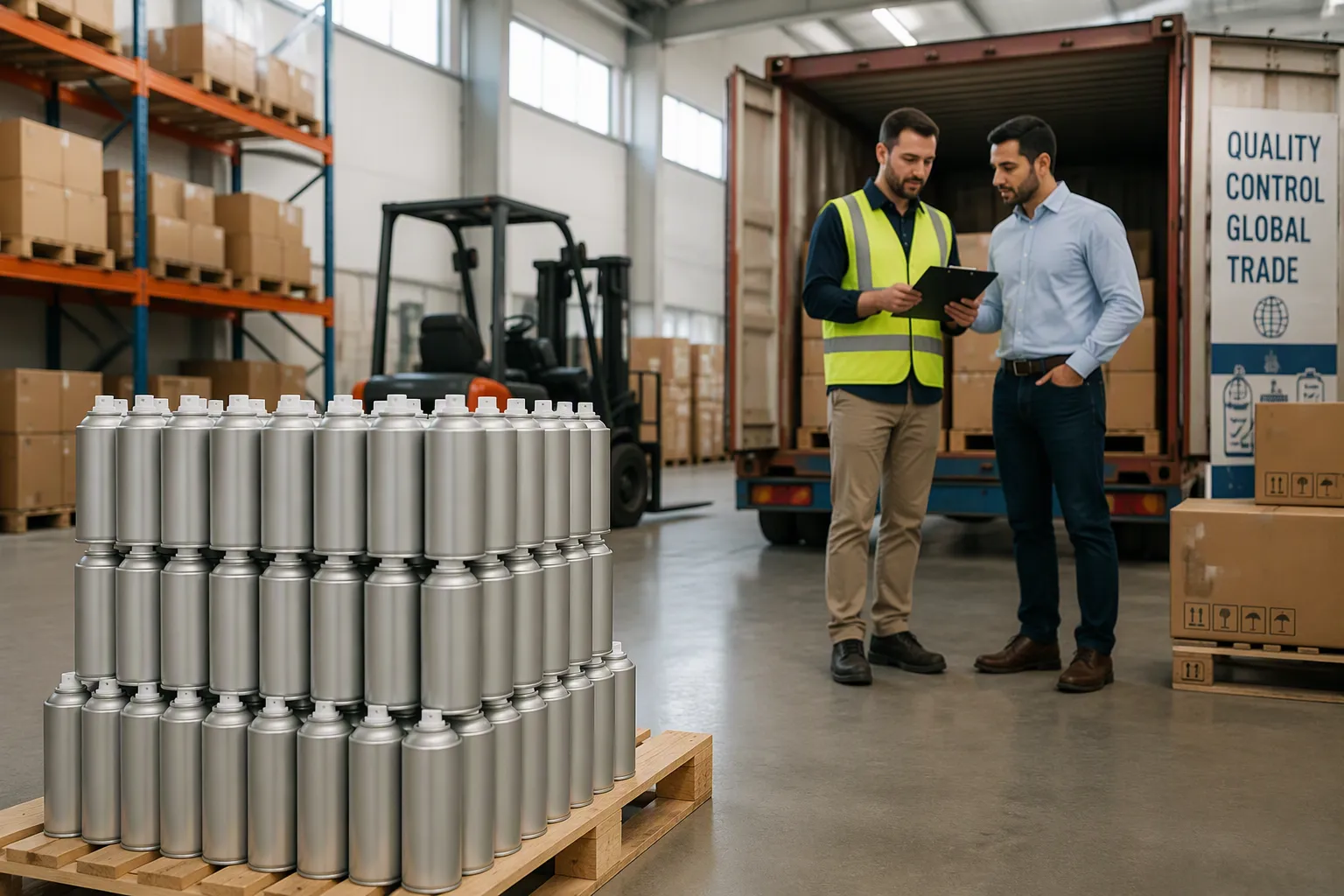
Five factors drive import success: supplier vetting and quality assurance, regulatory compliance and safety standards, cost analysis and total landed cost, logistics and shipping, and risk management and quality control. China leads the Asia-Pacific aerosol can market through a mature manufacturing chain. That strength explains why so many buyers import aerosol cans from China. Mounting trade barriers, high shipping costs, and taxes make these factors critical. Treat them as one connected checklist. SiHai supports that checklist with reliable sourcing and documentation.
Key Takeaways
- Check supplier credentials and test samples before you place an order.
- Follow all safety and labeling rules to avoid shipment delays.
- Calculate the total landed cost to make smart budget decisions.
Supplier Vetting and Quality Assurance When You Import Aerosol Cans From China

Supplier vetting sets the foundation for every later decision. A weak factory undermines compliance, cost, and delivery no matter how well you plan the other factors.
What Credentials Should a Chinese Aerosol Can Factory Hold?
Ask for the documents that prove a factory can serve your market. For U.S.-bound cosmetics and personal care aerosols, request these credentials:
- cGMP certificate (21 CFR Part 210 & 211), expected for cosmetics manufacturing
- Cosmetics Production License and ISO 22716 (cosmetics GMP)
- FDA registration or EU GMP compliance documents
- DOT and CPSC compliance evidence for aerosol products
Verify each certificate directly with the issuing body. A scanned PDF alone proves little.
Why Request Samples and Pre-Production Approvals?
Samples reveal what certificates cannot: seam quality, valve fit, coating adhesion, and spray performance. Test samples under your own filling conditions. Then approve a pre-production run before mass output begins. This step locks in specifications and catches defects while fixes remain cheap.
How Do You Audit Production Capacity and Track Record?
Match factory capacity to your order volume. A large Chinese aerosol can factory typically runs at this scale:
| Capacity Metric | Value |
|---|---|
| High-speed aerosol can production lines | More than 18 |
| Per-line production speed | Up to 350 cans per minute |
| Annual production capacity | More than 1 billion empty tinplate aerosol cans |
Confirm capacity with a factory audit and a review of past export orders. When you import aerosol cans from China, SiHai can coordinate factory audits, sample testing, and document checks on your behalf.
Regulatory Compliance and Safety Standards
Compliance failures stop shipments at the border. Resolve these rules before you negotiate price.
What Do U.S. DOT Rules Require for Aerosol Cans?
The DOT regulates aerosol containers under 49 CFR 173.306. For UN1950 aerosols, packing section 306 is the only authorized option. Key requirements include:
- Container capacity must not exceed 1 L (61.0 cubic inches).
- Liquid and gas must not completely fill the container at 45.4 °C (130 °F).
- You must meet the pressure conditions of §173.306(a)(3)(ii) for your metal container type.
- Containers need strong outer packaging.
- Each filled container must pass a hot water bath test under §173.306(a)(3)(v), unless you use an approved alternative test.
- Each outer package must be marked “INSIDE CONTAINERS COMPLY WITH PRESCRIBED REGULATIONS.”
- Gross weight per package must not exceed 30 kg (66 lb).
A limited quantity exception at §173.306(i) applies only after you meet §173.306(a)(3). It requires the limited quantity mark per §172.315 and exempts you from HazMat labels, specification packaging, shipping papers, and placards. Division 2.3 poison gases, PG I/II poisons, and PG I corrosives are forbidden in aerosol containers.
Which FDA and EPA Rules Apply to Contents and Coatings?
The FDA governs aerosol packaging when it applies to pharmaceuticals, cosmetics, food, or any other products that make health claims. Compliance with FDA standards is crucial for maintaining product safety, transparency, and efficacy.
Coatings fall under specific FDA sections:
- 21 CFR Part 175 covers adhesives and coatings.
- 21 CFR Parts 176 and 177 define permissible polymer systems, crosslinkers, pigments, and additives for food-contact coatings.
- 21 CFR 175.300 governs tank and vessel linings in beverage facilities.
The EPA aerosol coatings rule sets national VOC emission standards under Clean Air Act section 183(e). It sits at 40 CFR part 59, subpart E (§§ 59.500–59.516). The 2025 amendments add VOCs and reactivity factors, revise default reactivity factors, update category emission limits, and require updated test methods and electronic reporting. SiHai helps you confirm which rules apply to your formulation and coating system.
How Do You Verify Labeling and Documentation Accuracy?
Check every label and document before your goods leave the factory. Labeling must follow 49 CFR packaging and labeling standards plus OSHA, DOT, and EPA guidelines. Chemical identification, hazard classification, GHS-compliant signal words, pictograms, and hazard statements must all appear. Handling and storage instructions belong on the label too.
Documentation carries equal weight. The Importer of Record (IOR) is legally responsible for declarations, environmental and safety compliance, and duty payment. Your file should include CBP Form 3461, a TSCA certification, the bill of lading, and a correct HS/HTS classification. Misclassification risks delays, fines, or duty miscalculation. For air and ocean moves, add IATA DGR or IMDG markings, the shipper's statement, the dangerous goods declaration, the packing list, and emergency response information.
Cost Analysis and Total Landed Cost
A low unit price can hide a high final bill. Build your budget around total landed cost, not the factory quote alone.
Why Compare Unit Price Against Total Landed Cost?
Total landed cost captures every expense from factory gate to your warehouse. It includes the unit price, freight, insurance, duties, tariffs, fees, and handling charges. Compare suppliers on this full figure. A factory quoting a slightly higher unit price may still deliver the lower landed cost through better packaging, faster shipping, or cleaner documentation. SiHai helps you build this comparison early, so you negotiate from real numbers.
Which Duties, Tariffs, and Fees Should You Budget For?
Budget for each charge that applies to your shipment:
| Cost Component | What to Confirm |
|---|---|
| Base duty rate | Your HS/HTS classification for aerosol cans |
| Section 301 tariffs | Whether your product code falls under current lists |
| Merchandise Processing Fee | Ad valorem rate with min/max caps |
| Harbor Maintenance Fee | Applies to ocean imports |
| Customs broker fees | Entry filing and bond costs |
Tariff exposure shifts with trade policy. Recheck rates before every order and confirm the classification with your broker.
How Do Packaging, Testing, and Rework Costs Add Up?
Protective packaging for hazmat shipments adds cost per carton. Hot water bath testing, pressure checks, and third-party lab work add per-unit charges. Rework costs appear when samples fail or labels need correction. Budget a contingency line for these items. Track them per shipment, and you will spot which supplier keeps them low.
Logistics and Shipping Considerations
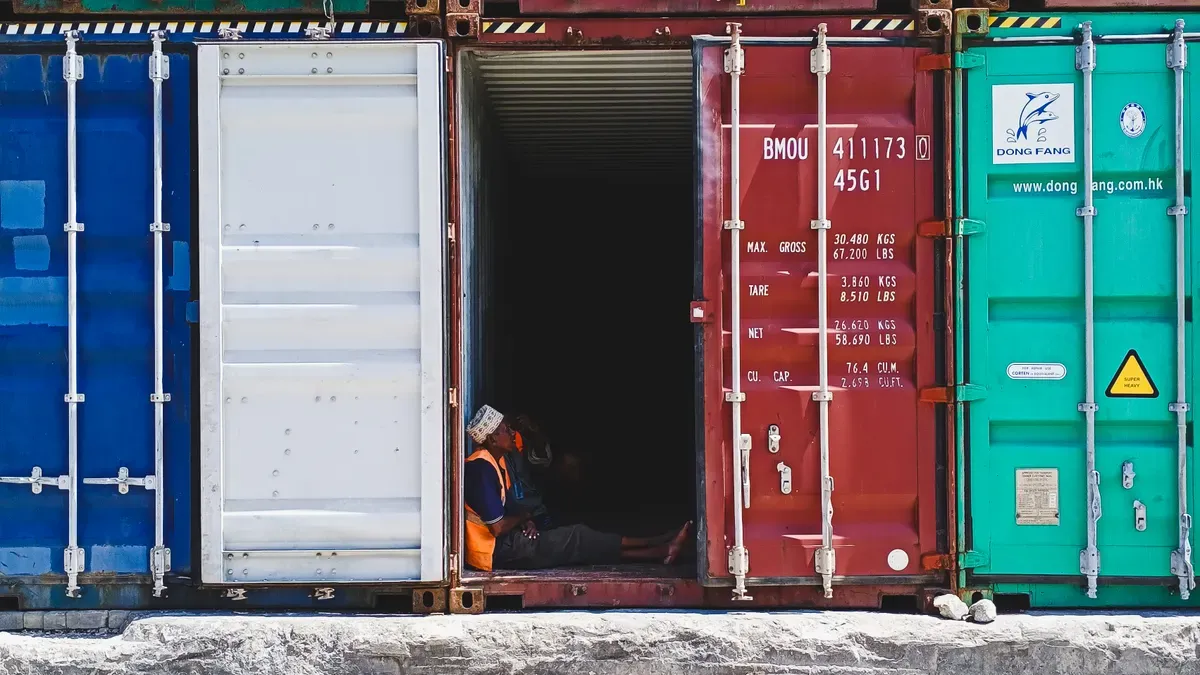
Shipping decisions determine whether your cargo arrives on time and intact. Plan the classification, freight mode, and port strategy before your first order ships.
How Are Aerosol Cans Classified for Hazmat Shipping?
Aerosol cans carry hazmat status in most shipping scenarios. Know the hazard class before you book freight:
- Class 2 (Gases) applies because the cans are pressurized.
- Class 3 (Flammable Liquids) applies when contents include alcohols or solvents.
- Some products fall under both classes, so even hair mousse or linen spray cannot ship freely.
- DOT governs U.S. ground moves, IATA governs air moves, and OSHA governs labeling and safety data sheets.
Under 49 CFR Part 171.8, an aerosol is a non-refillable receptacle holding a compressed, liquefied, or dissolved gas under pressure. Its sole purpose is to expel a nonpoisonous liquid, paste, or powder through a self-closing release device. The UN definition is broader, and the two are not harmonized. UN1950 therefore cannot serve U.S. ground transport, and a gas in a cylinder ships as UN3159 instead. Shippers may need a Special Permit until the definitions align. When unsure, treat the product as hazmat and check Sections 2 and 14 of the Safety Data Sheet.
Which Freight Mode and Incoterms Fit Your Volume?
Match freight mode to volume and urgency. Air freight suits small, high-value orders. Ocean freight suits full containers and cost-sensitive volumes. Choose Incoterms that assign hazmat responsibility clearly. FOB and CIF are common starting points. SiHai helps you select terms that fit your risk tolerance.
How Should You Plan for Port Delays and Warehousing?
Build slack into every schedule. Congestion differs sharply by port:
| Port | Country | Vessels in Port | Delay Duration |
|---|---|---|---|
| Shanghai | China | 450+ | 2 days |
| Los Angeles / Long Beach | United States | 110+ | 25+ days |
Book warehousing near your discharge port when you import aerosol cans from China. Buffer stock absorbs delay shocks and keeps your customers supplied.
Risk Management and Quality Control
Risk management turns your checklist into a repeatable system. Build inspection, contracts, and supply buffers into every order.
What Belongs in an Incoming Inspection Protocol?
Your protocol should cover four stages. Start with material inspection: verify tinplate dimensions, hardness, and surface appearance. Move to printing and coating checks for color accuracy, artwork, barcode quality, adhesion, film hardness, impact resistance, solvent resistance, and scratch resistance. For completed cans, measure diameter, height, and gram weight, confirm printing orientation, and run leak and internal pressure tests. Finish with packing checks on configuration, pallet tag barcoding, and appearance.
Visual inspection matters too. Examine the neck and shoulder for dents near the crimped valve, scan the sidewall and base for creases, and flex the longitudinal seam to catch separation. Calibrate your leak detection system before pressure testing, then record stability against these thresholds:
| Test Stage | Standard Pressure (bar) | Acceptable Loss (%) | Action Required |
|---|---|---|---|
| Pre-Test | 6.0 | 0 | Record baseline |
| Mid-Test | 6.0 | ≤1% | Monitor |
| Final-Test | 6.0 | ≤2% | Approve |
| Fail Case | <5.8 | >2% | Reject batch |
Check actuator caps last: inspect the nozzle seal for clogging, test the spray pattern, and look for cracks.
Which Contract Terms and Remedies Protect Your Order?
Write clear acceptance criteria, inspection rights, and rejection remedies into the contract. Specify who pays for rework, return freight, and replacement batches. Tie payment milestones to passed inspections.
Why Diversify Suppliers and Hold Buffer Stock?
Qualify a second factory before you need one. Hold buffer stock to absorb delays and quality holds. When you import aerosol cans from China, SiHai supports inspection coordination, contract documentation, and backup sourcing at each stage.
These five factors form one repeatable framework. Settle regulatory compliance and supplier verification before you negotiate price. A low unit price means little when clearance or quality fails. Apply this checklist to every shipment you import aerosol cans from China, and SiHai can support vetting, documentation, and logistics at each stage.
FAQ
How Long Does It Take to Import Aerosol Cans From China?
Typical production runs 25 to 35 days. Ocean freight adds 30 to 40 days to U.S. ports. Add customs clearance and inland transit. SiHai helps you build a realistic timeline before you commit.
What Minimum Order Quantity Should You Expect?
Most Chinese aerosol can factories set MOQs between 50,000 and 100,000 units per size. Custom printing raises the threshold. Confirm MOQ early, because it shapes your unit price and freight mode.
How Do You Start the Import Process With a New Supplier?
Request credentials and samples first. Audit the factory, then approve a pre-production run. Lock compliance documents and contract terms before you pay. SiHai can manage each step for you.