Chungfo electronics let you know more about the scientific cooling fan is widely used

In modern industry, electronic equipment and home appliances, the role of cooling fans can not be ignored. Today, we will take you to understand several common cooling fans and their wide application.

12 volt centrifugal fan


First of all, the dc cooling fan plays an important role in the current heat dissipation technology. Dc fans can not only operate efficiently at lower voltages, but also reduce power consumption and extend the service life of the equipment, especially suitable for applications with high energy efficiency requirements, such as computers, power supplies and medical instruments.


Secondly, 12v centrifugal fans are widely used in environments requiring high air volume and high pressure due to their unique design. 12v is especially suitable for automobiles, home appliances and mechanical and electrical equipment, which can ensure the stable operation of the system in high temperature environment and avoid failure caused by overheating.


In addition, tangential cross flow fan are widely used in air conditioning systems, kitchen appliances and coolers for their uniform airflow distribution and high static pressure characteristics. Because of its compact structure, low noise and stable wind speed, tangential cross-flow fans have been widely used in industrial and household appliances.


Whether it is DC cooling fan, 12v centrifugal fan or tangential cross flow fan, Chungfo Electronics products are adhering to the principle of high quality and high performance, and is committed to providing customers with the most suitable cooling solutions. Learn more about our cooling fan technology and application, please feel free to contact us! Chungfo Electronics, a professional cooling fan manufacturer, is committed to providing you with a comprehensive cooling solution.

Top

How to calculate the parameters of a DC blower? A must-read for heat dissipation design in the small household appliances industry

In small household appliances such as refrigerators, freezers and printers, heat accumulation is often one of the key factors affecting performance and lifespan. A highly efficient and reliable DC blower can not only solve the heat dissipation problem, but also effectively reduce noise and energy consumption. For R&D personnel or purchasing decision-makers, mastering how to calculate the basic parameters of a blower is the first step in choosing a suitable model.

110v cooling fans for cabinets

1.Why are DC blowers the first choice for heat dissipation of small household appliances?


Compared with AC fans, DC blowers have the advantages of small size, low energy consumption, fast response, and low noise, and are very suitable for:

(1). Air circulation in the refrigerator refrigeration area

(2). Heat dissipation of refrigerator refrigeration components

(3). Heat dissipation of thermal components inside printers

(4). Heat dissipation of electronic modules such as smart toilets and water dispensers

Small appliance manufacturers usually give priority to consulting dc blower supplier during the design stage to obtain model parameters suitable for different voltage and wind pressure requirements.


2.Calculate the key parameters of DC blower

ac cross flow fan manufacturerBefore determining the fan model, it is recommended to perform the following calculations:

(1). Air volume (CFM or m³/min)

The air volume reflects the amount of air flowing per unit time. Taking the printer as an example, the internal heat dissipation space is small but the airtightness is high, so a model with high air pressure and moderate air volume should be selected.

Simple estimation formula:

Air volume ≈ heat source power (W) × heat dissipation coefficient (usually 0.06 ~ 0.1)

Example: If the heat source power is 60W, an air volume of about 3.6 ~ 6 CFM is required.

(2). Static pressure (mmH₂O or Pa)

Especially in freezers and refrigerators, if it is necessary to penetrate partitions or filters, high static pressure blowers are more suitable. You can communicate with the wholesale 24v DC blower factory about the specific ventilation resistance value and match the appropriate fan.

(3). Input power calculation

Power = voltage × current. For example, a 12V blower with a current of 0.3A has a power of:

12 × 0.3 = 3.6W

This value helps to evaluate the overall system energy consumption and power compatibility.

(4). Noise level (dBA)

Household appliances have high requirements for quietness. It is recommended to choose a blower model with ≤30dBA. You can ask for a test report or measured value from the wholesale 12v blower manufacturer.


3、How to choose a reliable blower manufacturer?

(1). Do you have experience in the small appliance industry?

(2). Do you provide real test data and 3D drawings?

(3). Do you support proofing and fast delivery?

(4). Can you provide stable supply and support after-sales technical response?

Choosing a wholesale 12v blower fan manufacturer with R&D capabilities like our Chungfo Electronic Technology Co., Ltd. can not only ensure smooth technical docking, but also reduce problems during small-batch trial production and large-scale production. At the same time, most professional wholesale 24v dc blower fan factory will also provide voltage customization, wire customization and outlet direction optimization to facilitate customers' rapid integration.


For small household appliances with compact structures and diverse working environments such as refrigerators, freezers, and printers, the stability of the cooling system is crucial. Mastering the basic calculation methods of DC blower air volume, static pressure, power, etc. will help to make more accurate preliminary selection and testing.

brushless dc motor supplier for fans

If you are looking for a small blower solution for household appliances, please contact us. We have many years of experience in cooperation with Midea, as well as with large companies such as Chigo, Skyworth, Hitachi, LG, and Icon. We are not only a DC blower supplier, but also have rich customer service experience, and are committed to providing you with more stable, quieter, and more energy-efficient blower products.

Top

Is the axial fan noisy? -- Choose the right mute solution

Axial fan is a common heat dissipation device, widely used in industry, home appliances and other fields. However, noise issues often become an important consideration when users choose. So, is the noise of the axial fan big? The answer depends on a variety of factors, including design, material, speed, and environment.

Noise source analysis

8 inch round axial fan Price

The noise of axial fan mainly comes from the following aspects:

1. Airflow noise: Eddy currents and turbulence generated when the fan blades cut air can cause noise.

2. Mechanical noise: bearings, motors and other parts will produce mechanical vibration at high speed.

3. Installation environment: Loose installation or unstable support structure will aggravate operating noise.

Advantages of silent axial fans

For noise problems, there are already high-quality silent axial flow fans on the market. With optimized blade design, high-precision bearings and low-vibration motors, these fans significantly reduce noise during operation. In addition, the silent fan achieves a good balance between the air volume and the silent effect, making it an ideal choice for users who value a quiet environment.

How to choose the right axial fan?

If you are looking for a product with stable performance and low noise, the ac axial cooling fan is the choice not to be missed. This kind of fan is not only efficient and energy-saving, but also widely favored for its stable operating performance. As a professional ac axial fan supplier, Chungfo Electronics is committed to providing customers with low noise, high performance products to meet the needs of various applications.

When purchasing a fan, you are advised to select the most suitable model based on actual requirements, such as air volume, installation space, and noise control requirements. If you need to know more about the silent axial flow fan, please contact  Chungfo Electronics, we will provide you with quality solutions!

Top

Noise formation and treatment of cooling fan

The noise problem of cooling fans has been the focus of many consumers, especially when used in electronic devices, noise often affects the use experience. Different types of fans will produce different forms of noise during operation, mainly from the interaction between fan blades and air, fan motor operation and other factors.

permanent magnet coreless motor

dc cross flow fans are relatively quiet in terms of noise, because they use DC motors, which have less friction and vibration during operation. However, in the design of the fan blade, if the design is not proper, there may be a large airflow noise. Because the 12v cross flow fan is suitable for small equipment, when operating at low voltage, it may produce large wind cutting sound due to high speed or poor air duct.


tangential cross flow fans reduce noise through the tangential arrangement of blades and an optimized motor system. By improving the structure of the fan, such as using low-noise bearings and optimizing the shape and Angle of the blades, the noise generation can be effectively reduced.


In order to effectively deal with these noise problems, it is essential to choose high-quality fans and their accessories. In addition, reasonable air duct design, reduction of mechanical friction during fan operation and the use of silencing materials can also reduce noise levels to a large extent.

Top

Printer Fan Selection Guide Why the 12V DC Axial Fan Is the Ideal Solution

When it comes to printer design, choosing the right cooling fan plays a vital role in maintaining stable operation and protecting core components. An efficient cooling solution not only helps to lower the device's internal temperature but also extends the lifespan of its key parts, reducing failure rates and maintenance costs. In modern office environments, printers are often required to work continuously for extended periods, making a stable cooling system essential for reliable performance.

dc axial cooling fan

Among various cooling options, the dc axial fan 12v has proven to be the preferred choice for many printer manufacturers. Its compact size allows for easy installation in limited spaces, while the DC-powered design ensures steady airflow even at low voltage, reducing energy consumption and operating with minimal noise — a perfect fit for quiet office settings.


Beyond product performance, selecting an experienced dc axial fan manufacturer is equally important. A reliable supplier will not only offer products that meet strict quality standards but also provide professional suggestions on selecting the right fan models for your equipment, helping ensure long-term stability and optimized cooling performance.


At Chungfo Electronics, we are committed to delivering high-quality 24V dc axial fans for printers and a variety of electronic devices. Our solutions help enhance equipment stability and extend product life. Feel free to reach out to us for more information on printer fan selection.


Top

What is gridlock feedback technology?

mini exhaust fan Wholesale

The cooling fan with gridlock feedback technology refers to a technology used to prevent the fan motor from gridlock (that is, the motor shaft is stuck or unable to rotate) during operation. It monitors the speed and current of the motor in real time to determine whether there is a lock-up, and when it detects a lock-up, it feeds back to the control system to start the protection mechanism or take measures such as automatic stop, reverse or reduce the speed, etc. to avoid fan or motor damage. Locked-rotor feedback technology in high speed exhaust fan.


In the application of high speed exhaust fan, locked-rotor feedback technology is particularly important. High rpm exhaust fans are often required to provide strong airflow at high speeds, especially in electronic devices and industrial environments that require rapid heat dissipation.


High CFM exhaust fan wholesale application scenario

In some application scenarios with high airflow requirements, high cfm exhaust fan Wholesale has become the first choice for users. The main feature of this type of fan is to provide a large air volume, suitable for equipment or industrial systems with large area heat dissipation requirements.


Mini exhaust fan price and technical support

Not only high-power, high-speed fans, but also such as mini exhaust fan prices are increasingly favored by the market. Although the power of these small fans is small, due to the complexity of their use environment, the problem of blocked rotation can not be ignored.

Top

Precautions for the use of force sensors

The use of force sensors involves the following main steps:

1. Installation: When installing the force sensor, first check whether there are any scars on the surface of the product, whether the mounting bracket is firm and reliable, especially the cable and plug of the sensor, and avoid any external impact to prevent deformation. Avoid any external impact during installation, adjust the zero point to ensure the accuracy of the measured force value and the actual value. The force sensor should be kept away from heat and vibration sources, and installed in a constant temperature, humidity and dust-proof environment as much as possible. For small force sensors, install them on a stable, flat surface and make sure that the installation position can accurately reflect the actual force situation to avoid excessive force application and distortion.

2. Connect the circuit: Connect the transducer leads to a data acquisition system or signal conditioner. The transducer typically has four wires, two for power and two for signal output. Be sure the connections are made correctly to avoid signal loss or damage to the transducer.

3. Apply force: When applying force, be sure to apply the force in the direction of the sensor's measurement. The transducer's strain gages will deform slightly in response to the force, changing the resistance value. Small force sensors must be tested and calibrated at standard force levels to ensure accuracy and reliability of measurement results.

4. Acquisition of data: The resistance value of the load cell output is obtained through a data acquisition system or signal conditioner and converted into the corresponding force value. Typically, the change in resistance value is proportional to the magnitude of the force. For small force sensors, the calibration process includes placing the sensor under a standard force value for testing and recording the measurement results to determine whether the accuracy and stability of the sensor meets the requirements.

5. Analyze the data: According to the collected force data to analyze, you can get the size, direction and change trend of the force and other information, to provide a basis for subsequent control and decision-making. If the sensor output is found to be abnormal in use, it should be stopped immediately and reported to the relevant personnel for inspection and repair.

Maintenance and repair: the force sensor should be used according to the nameplate labeling temperature range, such as exceeding the difference should stop using. If the sensor output is found to be abnormal during use, it should be stopped immediately and inspected and repaired. 

Top

The future development trend of force sensors

In today's rapidly changing science and technology, force sensors as a modern industrial automation, intelligent key components, is with its unique charm to lead the new trend of future development. From machinery manufacturing to aerospace, from transportation to health care, force sensors are everywhere, and their future development trend is full of infinite possibilities.

First, the integration of technology and innovation

1. Miniaturization and integration: With the continuous development of micro-nanotechnology and integrated circuit technology, load cells will gradually realize miniaturization and integration. This trend makes the sensor easier to install and use, while improving the accuracy and reliability of the measurement. Miniaturized sensors will be widely used in biomedicine, aerospace and other fields that require high precision and miniaturization of measurement.

2. Intelligent and networked: transducers will gradually be integrated into intelligent systems, with self-calibration, self-adaptation, self-compensation and other intelligent functions. These features will improve the accuracy and reliability of measurement, while reducing maintenance costs. Networked force sensors will realize real-time monitoring and remote transmission of data, providing strong support for industrial automation, intelligent manufacturing and other fields.

3. New materials and processes: With the emergence of new materials and processes, force sensors will be manufactured using more advanced materials and technologies. For example, new materials such as nanomaterials, graphene and other new materials will be used in the manufacture of sensors to improve their performance and stability. New processes such as 3D printing, laser processing, etc. will also provide a more efficient and accurate method for the manufacture of sensors.

Second, the expansion of application areas

1. The development of emerging markets: force sensors will gradually expand to emerging markets and fields, such as wearable devices, smart homes, smart transportation and so on. The demand for sensors in these areas will be more diverse and personalized, providing new opportunities for the development of sensors.

2. Upgrading of traditional industries: in traditional industries, such as automobile manufacturing, aerospace, etc., force measurement sensors will play a more important role. With the continuous upgrading and transformation of these industries, the requirements for sensors will be more stringent and diverse.

Third, the market demand and trends

1. High-precision and high-reliability needs: With the increasing requirements of industrial manufacturing and scientific research on measurement accuracy and reliability, force sensors will pay more attention to high-precision and high-reliability design. This will provide more accurate data support for precision manufacturing, quality control and scientific research.

2. Customization and personalization needs: With the diversification of market demand, force sensors will gradually develop in the direction of customization and personalization. Enterprises will customize the design according to customer needs and application scenarios to provide sensor products that are more in line with customer needs.


Top

Understanding Creep in Force Sensors A Critical Factor in Measurement Accuracy

In the realm of force measurement, load cells and force sensors are indispensable tools for translating mechanical forces into quantifiable electrical signals.  However, achieving consistent and reliable measurements requires addressing several performance parameters, one of which is creep.  This phenomenon, though often subtle, can significantly impact the accuracy of force sensors over time.  In this blog, we’ll explore what creep is, why it occurs, and how it affects force measurement systems.

What is Creep? 

Creep refers to the gradual change in a force sensor’s output signal when a constant load is applied over an extended period.  Even if the applied force remains steady, the sensor’s reading may "drift" slightly over minutes or hours.  This drift is not caused by external factors like temperature fluctuations or vibrations but is inherent to the sensor’s material properties and design.

For example, if a 10 kN load is applied to a sensor, an ideal device would maintain a stable output (e.g., 10.00 mV) indefinitely.  In reality, creep might cause the output to drift to 10.05 mV after 30 minutes, even though the actual force hasn’t changed.

Why Does Creep Occur? 

Creep arises primarily from the viscoelastic behavior of materials used in force sensors.  Most load cells rely on strain gauges bonded to a metallic or composite structure (the "spring element").  When force is applied, the spring element deforms slightly, and the strain gauges measure this deformation.  However, no material is perfectly elastic—over time, internal stresses relax at a microscopic level, causing the material to deform further.  This slow deformation translates into a changing output signal.

Key factors influencing creep include:

1.  Material Selection: Metals like aluminum exhibit higher creep than stainless steel or alloy steels.  Polymers or composites may show even more pronounced effects.

2.  Load Magnitude: Higher loads amplify creep effects.

3.  Temperature: Elevated temperatures can accelerate creep due to increased molecular mobility.

4.  Sensor Design: A poorly optimized spring element geometry may concentrate stresses, worsening creep.

Impact on Measurement Accuracy

Creep is particularly problematic in applications requiring long-term static force monitoring, such as:

- Industrial weighing systems (e.g., silos, tank weighing).

- Structural health monitoring (e.g., bridges, buildings).

- Material testing machines (e.g., tensile/compression tests).

Even a small creep-induced drift can lead to cumulative errors in data logging or process control.  For instance, in a pharmaceutical production line, a drifting sensor might cause incorrect dosing over time, leading to product waste or regulatory non-compliance.

Quantifying and Compensating for Creep

Manufacturers characterize creep during sensor calibration.  A common test involves applying a rated load for 30 minutes and measuring the output deviation.  Creep is typically expressed as a percentage of the full-scale output (e.g., "±0.05% FS/30min").

To mitigate creep:

1.  Material Optimization: High-quality sensors use creep-resistant alloys (e.g., 17-4 PH stainless steel) and advanced composites.

2.  Design Improvements: Finite element analysis (FEA) helps optimize spring element geometry to distribute stresses evenly.

3.  Signal Conditioning: Modern amplifiers often include creep compensation algorithms.

4. Temperature Control: Active or passive thermal stabilization minimizes temperature-related drift.

Creep is a fundamental challenge in force sensor design, rooted in the physics of materials.  While it cannot be eliminated entirely, understanding its causes and mitigation strategies empowers engineers to select sensors with appropriate specifications for their applications.  When evaluating force sensors, always check the manufacturer’s creep rating and ensure it aligns with your measurement duration and precision requirements.  After all, in precision instrumentation, even the smallest drift matters!

By prioritizing creep-resistant technologies and smart compensation methods, modern force sensors continue to push the boundaries of accuracy and reliability in an ever-demanding industrial landscape.

Top

Understanding the Lashing Capacity of Ratchet Straps

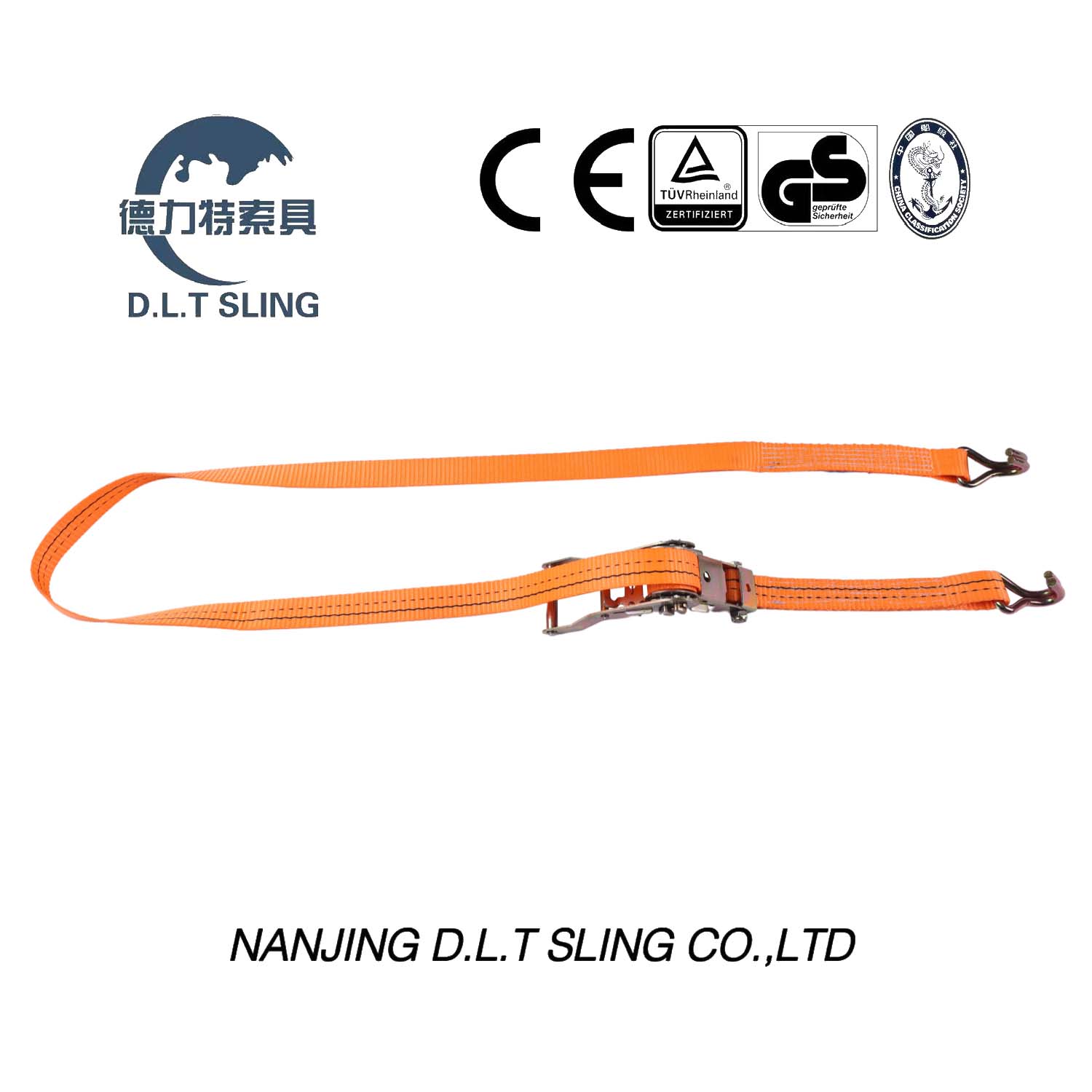
When it comes to securing cargo during transportation, ensuring that loads are properly lashed down is crucial for both safety and regulatory compliance. Ratchet straps, with their efficient tightening mechanisms and reliable performance, are commonly used for this purpose. One key consideration when using ratchet straps is understanding their lashing capacity and how it impacts their safe usage.

The lashing capacity of a ratchet strap refers to the maximum load weight that the strap can safely secure in a particular application. This capacity is determined by various factors, including the material strength of the strap, the design of the ratchet mechanism, and the quality of the overall construction. It is essential to adhere to the specified lashing capacity to prevent overloading, which can lead to strap failure and pose serious safety risks.

Manufacturers typically provide the lashing capacity of ratchet straps in terms of both Working Load Limit (WLL) and Minimum Breaking Strength (MBS). The Working Load Limit indicates the maximum load that the strap can safely handle during normal use, while the Minimum Breaking Strength represents the point at which the strap will fail. It is important to note that the Working Load Limit is a fraction of the Minimum Breaking Strength, as a safety factor is built in to ensure reliable performance under varying conditions.

To determine the appropriate ratchet strap with the right lashing capacity for a specific application, it is essential to consider factors such as the weight and size of the load, the mode of transportation, and any regulatory requirements. Selecting a ratchet strap with a lashing capacity that exceeds the anticipated load weight helps to ensure a secure and safe transport operation.

In conclusion, understanding the lashing capacity of ratchet straps is critical for maintaining cargo security and transport safety. By adhering to the specified Working Load Limit and considering key factors in selecting the right strap for the job, operators can effectively secure their loads and mitigate the risks associated with improper strapping. Prioritizing safety and compliance through proper usage of ratchet straps contributes to efficient and successful cargo transportation.

ratchet lashing manufacturer

Top