When choosing an aerosol can for a new product, buyers need to consider more than just its capacity, diameter, and material. The shape of the can also plays an important role in packaging design, valve assembly, appearance, and manufacturing requirements. Two common options in tinplate aerosol packaging are necked-in aerosol cans and straight-wall aerosol cans.
Although both designs are used for pressurized spray products, their structural profiles are different. A necked-in can has a reduced-diameter upper section, while a straight-wall can maintains a more consistent cylindrical diameter along its body. These differences influence how the containers are designed, assembled, presented, and matched with filling equipment.
At SiHaiPack, both necked-in and straight-wall tinplate aerosol cans are available in different sizes and configurations. Understanding their characteristics can help packaging buyers select a suitable container for personal care, household, automotive, and industrial aerosol applications.

Tinplate aerosol cans with different structural profiles
What Is a Necked-In Aerosol Can?
A necked-in aerosol can is a container with an inwardly reduced upper diameter. The cylindrical body transitions into a narrower shoulder and top opening, creating a stepped profile near the valve mounting area.
This design is widely used in conventional three-piece tinplate aerosol packaging. The narrower upper section accommodates the corresponding cone and valve assembly, while the main cylindrical body provides the space required for the product formulation and propellant.
One practical advantage is the reduced top diameter, which can help optimize material usage in the end structure and provide a compact appearance. The final material savings depend on the complete can dimensions and component design rather than the necked-in shape alone.
Necked-in cans are commonly used for hair sprays, air fresheners, deodorants, insecticides, cleaning sprays, and automotive care products. Their familiar appearance and compatibility with established aerosol packaging designs make them a practical option for many manufacturers.
For buyers looking for this structure, SiHaiPack offers a dedicated necked-in aerosol can product range, covering several diameters and applications.
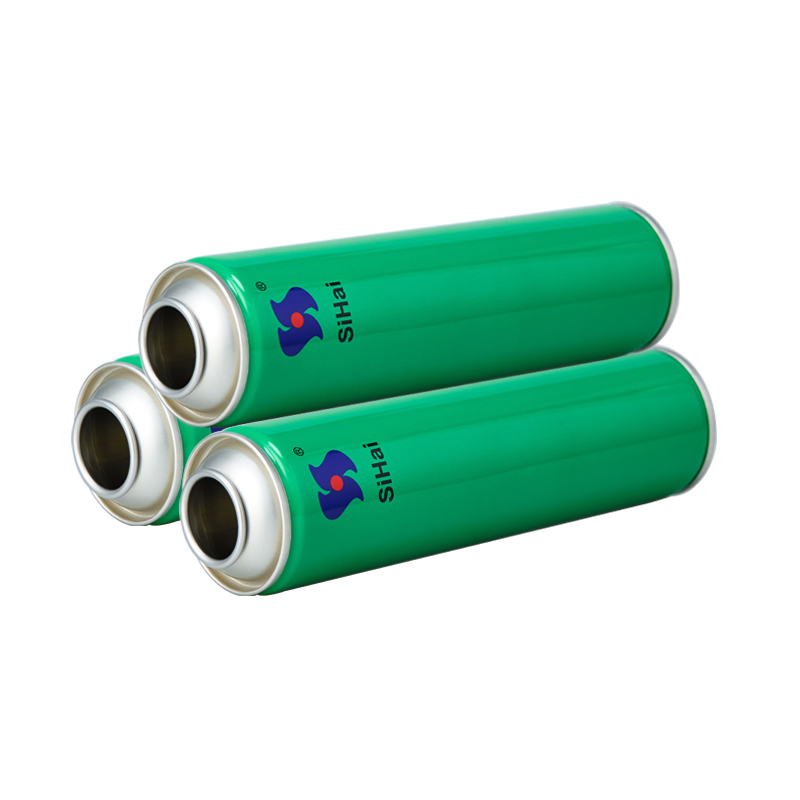
Necked-in aerosol cans with customized exterior printing
What Is a Straight-Wall Aerosol Can?
A straight-wall aerosol can features a cylindrical body with a consistent outside diameter along its main sidewall. Unlike a necked-in design, the upper body does not narrow inward before reaching the top closure area.
The straight-wall structure provides a continuous cylindrical appearance and a larger uninterrupted sidewall area. This can be useful for brands that require prominent product graphics, technical information, or extensive printed designs around the container.
For packaging designers, the consistent body diameter can make it easier to plan artwork placement and maintain a uniform visual appearance. However, the top cone, valve opening, and end components still need to be designed to match the filling and assembly requirements.
Straight-wall aerosol cans are used in applications such as automotive cleaners, butane gas packaging, industrial sprays, and other products requiring specific container configurations.
SiHaiPack's straight-wall aerosol can collection includes 65mm tinplate can options designed for different filling applications.

Straight-wall aerosol cans with a consistent cylindrical body profile
Necked-In vs. Straight-Wall Aerosol Cans: Main Differences
The main difference between these two aerosol can types is their external body geometry. However, the structural distinction also affects several practical considerations during packaging development and production.
| Comparison | Necked-In Can | Straight-Wall Can |
|---|---|---|
| Body Profile | Narrowed upper section | Consistent cylindrical sidewall |
| Upper Structure | Reduced-diameter shoulder and opening | Top assembly matches the body diameter design |
| Printing Surface | Main cylindrical body available for printing | Continuous sidewall provides a uniform artwork area |
| Appearance | Tapered shoulder profile | More uniform cylindrical appearance |
| Common Applications | Hair spray, air freshener, insecticide, personal care | Automotive care, butane gas, industrial spray |
| Design Considerations | Necking geometry and valve assembly compatibility | Top closure configuration and filling-line compatibility |
Neither structure is automatically better for every application. The right choice depends on the filling process, product requirements, desired appearance, packaging dimensions, and overall manufacturing specifications.
How the Can Structure Affects Packaging Design and Printing
The shape of an aerosol can influences how its artwork is arranged and how the finished product appears on retail shelves. This is particularly important for brands that rely on packaging graphics to communicate product benefits and differentiate their products.
Printing Considerations for Necked-In Cans
Necked-in cans provide a cylindrical printing area below the narrowed shoulder. Designers need to account for the transition between the main body and the upper cone when preparing artwork. Important product information and brand elements should remain within the appropriate printable area.
For brands using CMYK or spot-color printing, the artwork should be prepared according to the manufacturer's printing requirements. This helps maintain consistent positioning, color presentation, and readability across production batches.
Printing Considerations for Straight-Wall Cans
The continuous cylindrical sidewall of a straight-wall can offers a consistent surface for product graphics. This can be advantageous when the design includes large visual elements, detailed instructions, or extensive branding information.
However, the final printable area still depends on the can height, seam position, top and bottom construction, and printing process. Artwork should always be checked against the actual can dimensions before production.
SiHaiPack provides customized exterior printing, including CMYK and Pantone color options for its tinplate aerosol cans. Buyers can submit their artwork for technical review before confirming a production order.
Which Aerosol Can Type Is Suitable for Different Applications?
Application requirements are one of the most important factors when choosing between necked-in and straight-wall aerosol cans. The product formulation, filling equipment, pressure requirements, and final packaging appearance should all be considered together.
Personal Care Products
Hair sprays, deodorants, shaving foams, and body sprays commonly use conventional necked-in aerosol packaging. The familiar shoulder profile works well for many established personal care packaging designs.
When selecting a can, manufacturers should check valve cup dimensions, product compatibility, internal coating requirements, and the pressure specification of the complete container.
Household Cleaning and Insecticide Products
Air fresheners, insecticides, cleaning sprays, and other household aerosol products are frequently packaged in tinplate cans. Both necked-in and straight-wall structures may be considered depending on the container design and filling requirements.
For these applications, internal lacquer compatibility is particularly important. The coating should be selected according to the formulation to help prevent unwanted interaction between the contents and the metal packaging.
Automotive and Industrial Products
Automotive cleaners, lubricants, spray paints, rust removers, and industrial maintenance products may require different can dimensions and pressure specifications. Straight-wall cans can be considered when a consistent cylindrical body or a particular packaging configuration is required.
For example, SiHaiPack offers a 65mm straight-wall empty aerosol tinplate can designed for applications such as spot lifters, car cleaners, and butane gas packaging.

Straight-wall aerosol cans for different product packaging requirements
How to Select the Right Aerosol Can Structure
Choosing the right can type requires a clear understanding of the product and its packaging conditions. Instead of selecting a design based only on appearance, buyers should evaluate several technical and commercial factors.
- Product formulation: Identify the contents and check whether the formulation requires a specific internal lacquer or material compatibility assessment.
- Valve and actuator requirements: Confirm the valve cup diameter, mounting configuration, and compatibility with the selected can opening.
- Filling-line compatibility: Check whether the existing filling and closing equipment can handle the selected can dimensions and top configuration.
- Can dimensions: Confirm the required diameter, height, capacity, and overall packaging design.
- Pressure requirements: Specify the expected operating pressure and required deformation and burst test values.
- Printing and branding: Evaluate the available printable area, artwork layout, color requirements, and surface finish.
- Transportation and storage: Consider stacking, handling, shipping conditions, and the protection required for the finished product.
Providing these details allows the manufacturer to assess whether a necked-in or straight-wall design is more appropriate for the project. It also helps reduce unnecessary modifications during sampling and mass production.
SiHaiPack Aerosol Can Manufacturing and Customization Options
Guangdong Sihai Iron-Printing and Tin-Making Co., Ltd. was established in 1998 and specializes in tinplate processing, printing, and aerosol can manufacturing. The company provides packaging solutions for personal care, household, automotive, and industrial aerosol products.
According to SiHaiPack's published product information, its empty tinplate aerosol cans cover diameters of 45mm, 52mm, 57mm, 60mm, 65mm, and 70mm. Both necked-in and straight-wall configurations are available within its product range, with dimensions and specifications depending on the selected model.
The company's manufacturing process includes iron cutting, tinplate printing and coating, cone and dome pressing, aerosol can making, and final packing. Its published production information also identifies the use of Japan FUJI printing equipment and SOUDRONIC welding machines.
For customization, customers can discuss can dimensions, body structure, exterior CMYK or Pantone printing, internal coating, and packaging arrangements according to their project requirements.
If you are comparing the two aerosol can designs, the custom-size tinplate aerosol can range is a useful starting point for reviewing available diameters, can types, and production options.
Whether you need a conventional necked-in can or a straight-wall container, sharing your product application and technical requirements with the manufacturer is the best way to identify a suitable packaging solution.
Frequently Asked Questions About Necked-In and Straight-Wall Aerosol Cans
Q: What is the main difference between necked-in and straight-wall aerosol cans?
A: A necked-in aerosol can has an upper section that narrows inward toward the top opening. A straight-wall aerosol can maintains a consistent cylindrical diameter along its main body. The difference mainly concerns the container's structural profile and corresponding end design.
Q: Are necked-in aerosol cans more common?
A: Necked-in steel aerosol cans are widely used in conventional aerosol packaging, including personal care, household, and automotive products. However, the preferred design depends on the application and filling requirements.
Q: Are straight-wall aerosol cans better for printing?
A: Straight-wall cans provide a consistent cylindrical sidewall, which can simplify artwork layout and create a uniform printing area. The actual printable area still depends on the can dimensions, seam position, and manufacturing process.
Q: Which aerosol can type is suitable for hair spray?
A: Necked-in tinplate aerosol cans are commonly used for hair spray products. The final selection should consider valve compatibility, product formulation, filling pressure, and required container dimensions.
Q: Can SiHaiPack manufacture both necked-in and straight-wall aerosol cans?
A: Yes. SiHaiPack's published product range includes both necked-in and straight-wall tinplate aerosol cans. Available diameters include 45mm, 52mm, 57mm, 60mm, 65mm, and 70mm, depending on the selected product and configuration.
Q: Do necked-in and straight-wall aerosol cans use the same valves?
A: Not necessarily. Valve compatibility depends on the valve cup diameter, mounting configuration, and top opening design. Buyers should confirm the required dimensions with the can and valve manufacturers before ordering.
Q: How do I choose between necked-in and straight-wall aerosol cans?
A: Consider the product application, filling equipment, valve requirements, can dimensions, pressure specifications, and printing preferences. A manufacturer can help evaluate the appropriate structure based on these details.